Herd Health
Ramps, Barnyards, and Transitions: Grooving Where Slips Hurt Most
By Rick Jr. · March 10, 2026
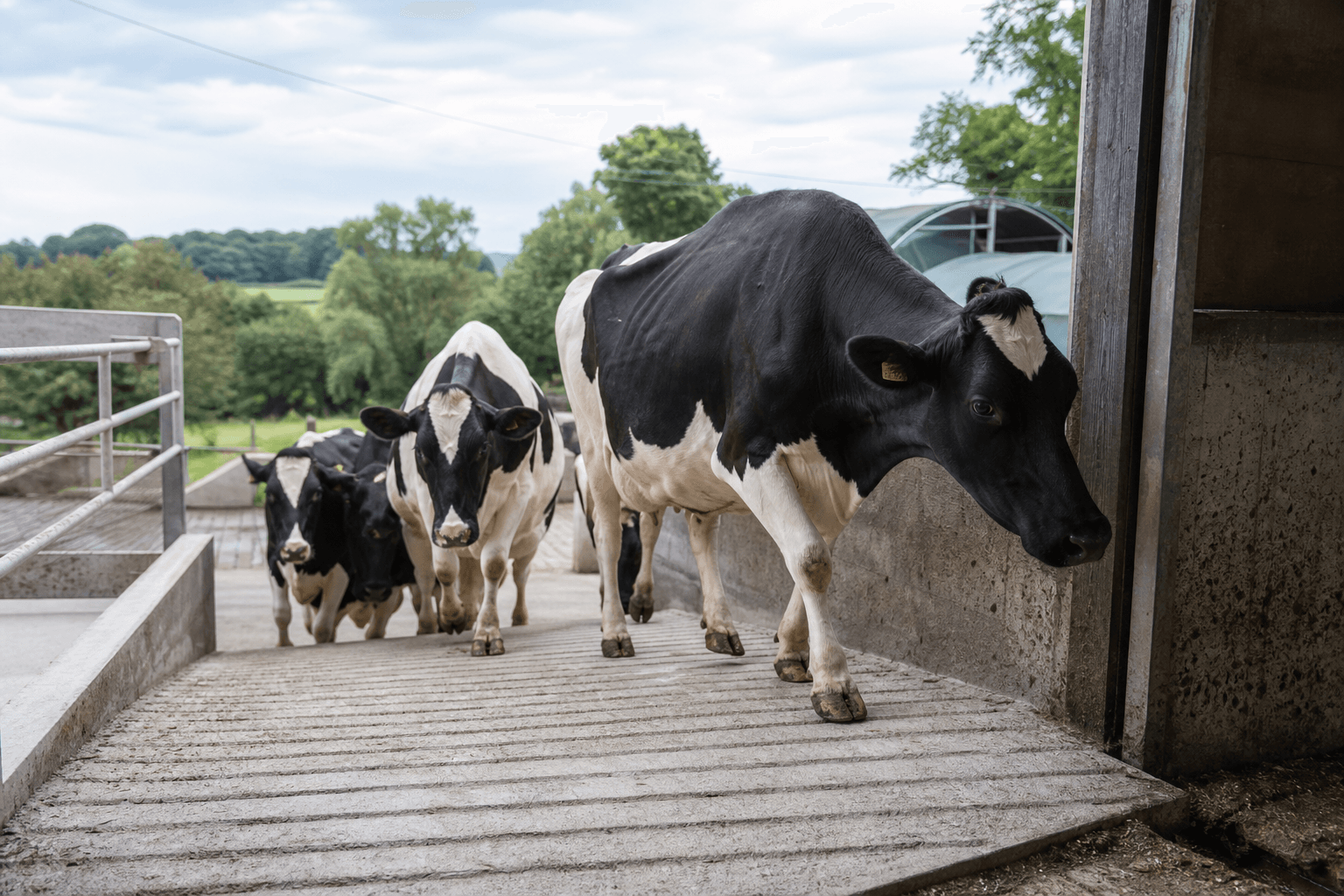
Grooved barnyard ramps and transition areas giving dairy cows secure footing entering and exiting the barn
Outdoor concrete and transition ramps are often the slickest surfaces on the farm — and the first place cows lose footing on the way in or out of the barn.
The Most Overlooked Slip Zones on the Farm
Managers focus on barn interiors — alleys, stalls, parlors — and forget the surfaces cows cross before they ever reach grooved concrete inside. Barnyards, transfer lanes, entrance ramps, and exit aprons are often the slickest floors on the property. They're exposed to weather, manure, feed spillage, and algae growth. A cow that walks confidently through a grooved alley can still go down on a slick ramp at the barn door — and outdoor slip injuries are often worse because there's less nearby help and harder surfaces surrounding the fall.
Transition zones are where traction mismatches hurt most. A cow stepping from grooved alley onto smooth ramp concrete experiences the same traction cliff that causes hesitation in parlor holding areas. The fix is continuity — grooving the transitions so cows never hit a slick surface between the barnyard and the barn interior. Our barnyard and ramp grooving service covers these outdoor and transition zones specifically.
The barn floor can be perfect. If the ramp is slick, cows still go down.
Why Outdoor Concrete Gets So Slick
Outdoor concrete faces everything indoor floors don't — rain, snow, ice, freeze-thaw cycles, UV degradation, and organic matter buildup. Smooth outdoor concrete with a thin film of water or manure becomes as slick as ice. Algae and bacteria grow in pores and surface imperfections, creating a biological slick layer that pressure washing temporarily fixes but never permanently solves. Grooving cuts through that surface problem by giving hooves mechanical edges to grip regardless of surface film.
Ramp surfaces are worse because gravity works against the cow. On level ground, a slip might mean a stagger. On a ramp, a slip means a fall — with injury potential from both the slide and the impact at the bottom. Grooving ramps increases the friction coefficient enough that cows walk up and down at normal pace without the cautious creep that slows group movement at every barn entry and exit.
Many farms built before grooving was standard have smooth ramp and barnyard concrete that's never been treated. These are often the oldest surfaces on the property — decades of wear polished them smooth. They don't need replacement. They need grooves. At roughly $0.75/sq ft, grooving outdoor concrete is far cheaper than repouring a ramp or barnyard pad.
Freeze-thaw cycles roughen some outdoor concrete unevenly — high spots polish smooth while low spots hold water and algae. Grooving levels the traction equation by giving hooves mechanical edges that work whether the surface is wet, dry, or iced over at the margins.
Grooving Ramps: Angle, Pattern, and Depth
Ramp grooving requires different planning than level-floor grooving. Groove direction should run perpendicular to the slope so hooves catch edges when gravity pulls them downhill. Parallel grooves on a ramp can actually channel a sliding hoof — perpendicular grooves stop it. Our crew cuts ramp grooves with the slope in mind, adjusting depth and spacing for the angle and expected traffic volume.
Diamond pattern works well on ramp landings and turn platforms where cows change direction at the top or bottom. Straight perpendicular grooves handle the ramp surface itself. The combination gives multi-directional grip at pivot points and directional grip on the slope — the same zone-by-zone thinking we apply inside the barn. See our pattern guide for details on how diamond and straight-line patterns work together.
Weather matters for timing. We groove outdoor concrete in fair weather so cuts cure properly and cows aren't exposed to fresh-cut surfaces in extreme conditions. Spring and fall are popular windows for ramp and barnyard work — plan ahead if you want outdoor grooving on your calendar before the next season turns.
Barnyards and Transfer Lanes
Barnyards see mixed traffic — cows, skid steers, feed wagons, and foot traffic. Grooving barnyard concrete improves cow traction without creating problems for equipment. Square-edged grooves at standard spacing handle cow traffic reliably, and the grooves themselves don't impede wheels or skid-steer operations on level yard surfaces.
Transfer lanes between barns, from barn to parlor, or from barn to pasture are high-traffic paths that cows use multiple times daily. Smooth transfer lanes create daily slip exposure that accumulates into lameness over months. Grooving these lanes closes a gap that barn interior work alone can't address. Cows that never slip on the way to the parlor are cows that arrive calm and ready to milk.
If you're planning a full-barn grooving project, include the yard and transitions in your walk-through. We'll map every concrete surface cows touch — inside and out — and quote the full scope. Request a free estimate that covers the whole farm footprint, not just the barn interior.
Injury Prevention and the Lameness Connection
Outdoor slip injuries are often acute — a cow goes down hard on concrete and suffers injury immediately. Indoor slips more often lead to chronic lameness from repeated micro-trauma. Both cost money. Acute injuries mean emergency treatment, potential culling, and replacement heifer costs. Chronic lameness means $4.50/day, 700–900 lbs of lost milk, and $76–$533 per treatment case. Grooving transitions prevents both pathways by removing the slick surface that starts them.
The Dairyland Initiative emphasizes safe movement throughout the facility — not just inside the barn. Transition areas are explicitly identified as high-risk zones in barn design guidelines. Grooving outdoor and transition concrete aligns your farm with those standards and gives you a defensible answer when insurers, auditors, or veterinarians ask about slip prevention.
Herd managers who've grooved ramps and barnyards report fewer emergency vet calls for injuries, fewer down cows in the yard, and smoother group movement at barn entries. The improvement is visible from day one — cows walk ramps at normal speed instead of creeping. That alone tells you how much confidence they lacked before.
Insurance and safety audits increasingly ask about slip prevention on farm transitions — grooved ramps and barnyards give you a documented, research-backed answer instead of "we've never had a problem." Hope isn't a prevention strategy when a down cow in the yard costs more than the grooving job that would have stopped it.
Planning Outdoor Grooving Around Your Operation
Outdoor grooving requires dry conditions and reasonable temperatures for best results. We schedule barnyard and ramp work around weather windows and your production calendar — often pairing it with indoor grooving so the crew mobilizes once and covers the full scope. That approach saves you mobilization cost and gets every zone done in one visit.
Regrooving outdoor concrete follows the same 6–8 year cycle as indoor floors, though weather exposure can sometimes shorten the cycle in high-traffic yard areas. We'll tell you honestly what to expect for your specific conditions during the walk-through — no overselling durability we can't back up. Learn about our approach on the about page and read why grooving works on every concrete surface cows cross — not just the ones inside the barn.
Map every concrete path cows travel in a single day — pasture to barn, barn to parlor, parlor to barnyard, barnyard to feed bunk. Any segment left smooth breaks the chain. A fully connected grooving plan costs no more per square foot; it just requires walking the whole farm footprint once before the first blade touches concrete.
Spring and fall are the practical windows for outdoor work — plan ramp and barnyard grooving alongside indoor phases when weather allows so the crew mobilizes once and finishes the full connected path before the next season turns.
A grooved ramp costs less than one emergency vet call for a down cow on slick concrete at the barn door.
Frequently Asked Questions
Can you groove ramps in winter?
We schedule outdoor grooving in fair weather for best results. Freeze-thaw conditions and wet cures compromise groove quality. Spring and fall are ideal windows. We'll plan timing with you during the estimate walk-through.
Will grooved barnyards affect skid steer or equipment traffic?
Standard groove spacing doesn't impede wheels or skid-steer operations on level yard surfaces. We cut grooves for cow traction, not against equipment use. If you have specific equipment concerns, we'll address them during the walk-through.
Do outdoor grooves wear faster than indoor grooves?
Weather exposure can accelerate wear in high-traffic yard areas, but square-edged grooves still typically last 6–8 years outdoors. We'll assess your specific conditions and give you an honest regroove timeline during the estimate.