

Est. 1980·35+ years·Marlette, MI·All 50 states except Hawaii & Alaska
Compare
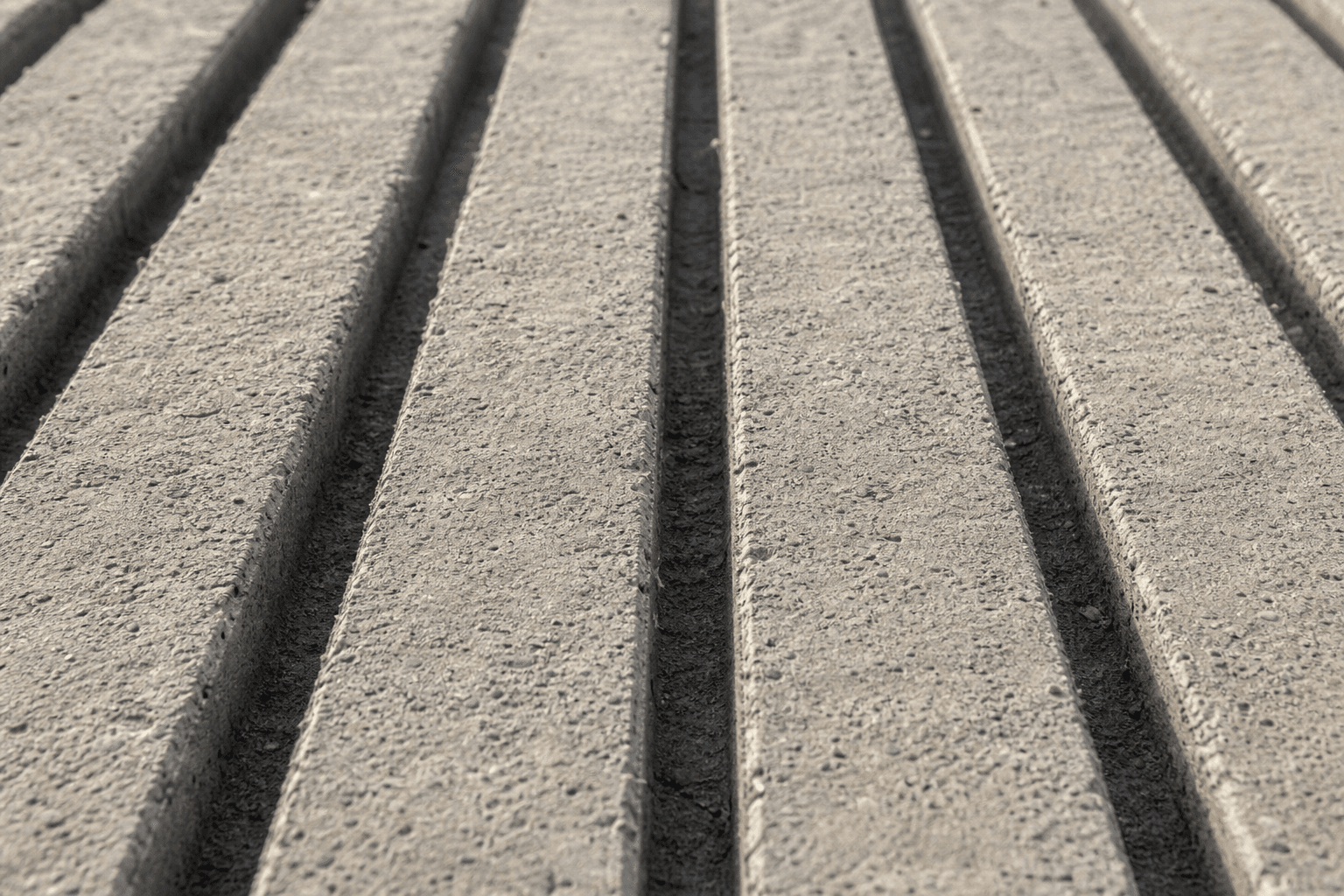
Grooving vs. Traction Milling
You've heard milling is the future and grooving is obsolete. Here's the calm, factual comparison — no defensiveness, just what the research and field experience show.
Head-to-head comparison
Both methods aim to improve traction. The difference is in how they achieve it, how they hold up, and what they do to hooves over time.
| Square-edged grooving | Traction milling | |
|---|---|---|
| Traction method | Square-edged grooves — proven standard when properly cut and maintained | Aggressive initial texture that can fade unevenly |
| Maintenance | Regroove every 6–8 years as edges wear | May require re-treatment; texture degrades unpredictably |
| Hoof abrasion risk | Low when grooves are square-edged and at proper spacing | Higher abrasion risk if surface is too aggressive or uneven |
| Typical cost | Roughly $0.75/sq ft — fair, flat pricing from a 35-year crew | Often higher per sq ft from traveling contractors |
| Best for | Barn floors, alleys, parlors — the proven dairy industry standard | Specific applications — not a universal replacement for proper grooving |
Why critics say grooving 'doesn't work'
The failures they cite almost always come from one of these — not from properly cut, maintained square-edged grooves.
- Worn grooves — edges round off over 6–8 years and lose traction. Solution: regroove on schedule.
- V-shaped profiles — improper cuts abrade hooves and fail to grip. Solution: square edges at research-backed spacing.
- Wrong spacing — too wide or too narrow reduces effectiveness. Solution: MSU / UW–Madison Dairyland Initiative standard.
Properly cut, maintained square-edged grooves remain the proven standard for dairy barn floors. Milling has its place in specific applications — but it's not a universal replacement for experience-backed grooving.
Want an honest assessment of your floors?
We'll tell you straight whether grooving, regrooving, or another approach makes sense for your barn.