Herd Health
Free-Stall Footing: Why Secure Floors Start in the Stall
By Rick Jr. · November 11, 2025
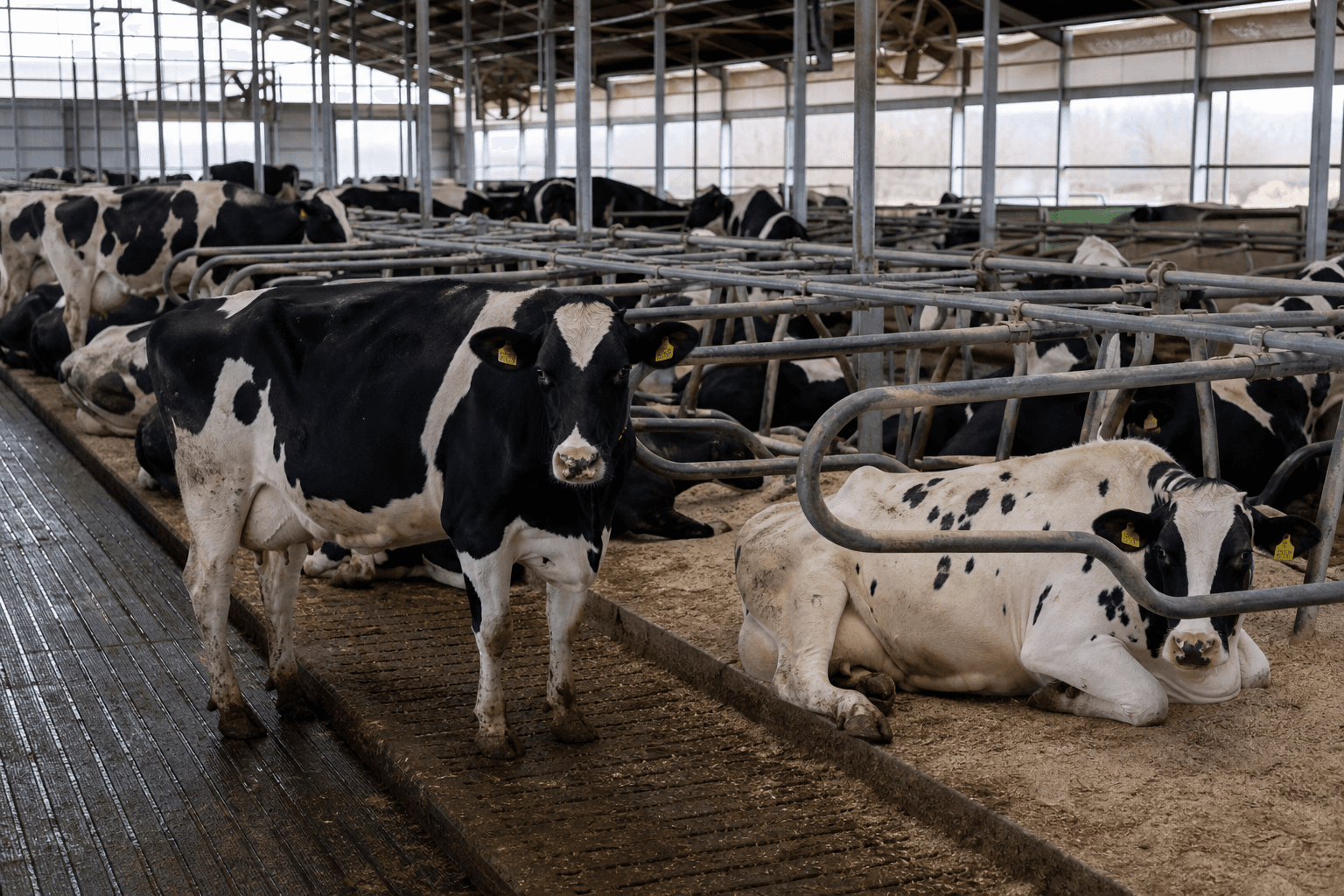
Grooved free stall floors giving dairy cows secure footing when standing and lying down
Cows spend half their day in free stalls. Smooth stall floors cause scrambling, hoof wear, and injuries that show up in your lameness numbers months later.
The Stall Is Where Lameness Starts
Dairy cows spend roughly 12 to 14 hours a day lying in free stalls. That's half their life on a surface most managers overlook when they think about floor traction. Alleys get attention because you see cows slip there. Stalls hide the problem — a cow that scrambles getting up at 2 a.m. doesn't make a scene, but she pays for it in hoof wear, hock damage, and the kind of lameness that costs $4.50 per day and strips 700–900 pounds of milk from a lactation.
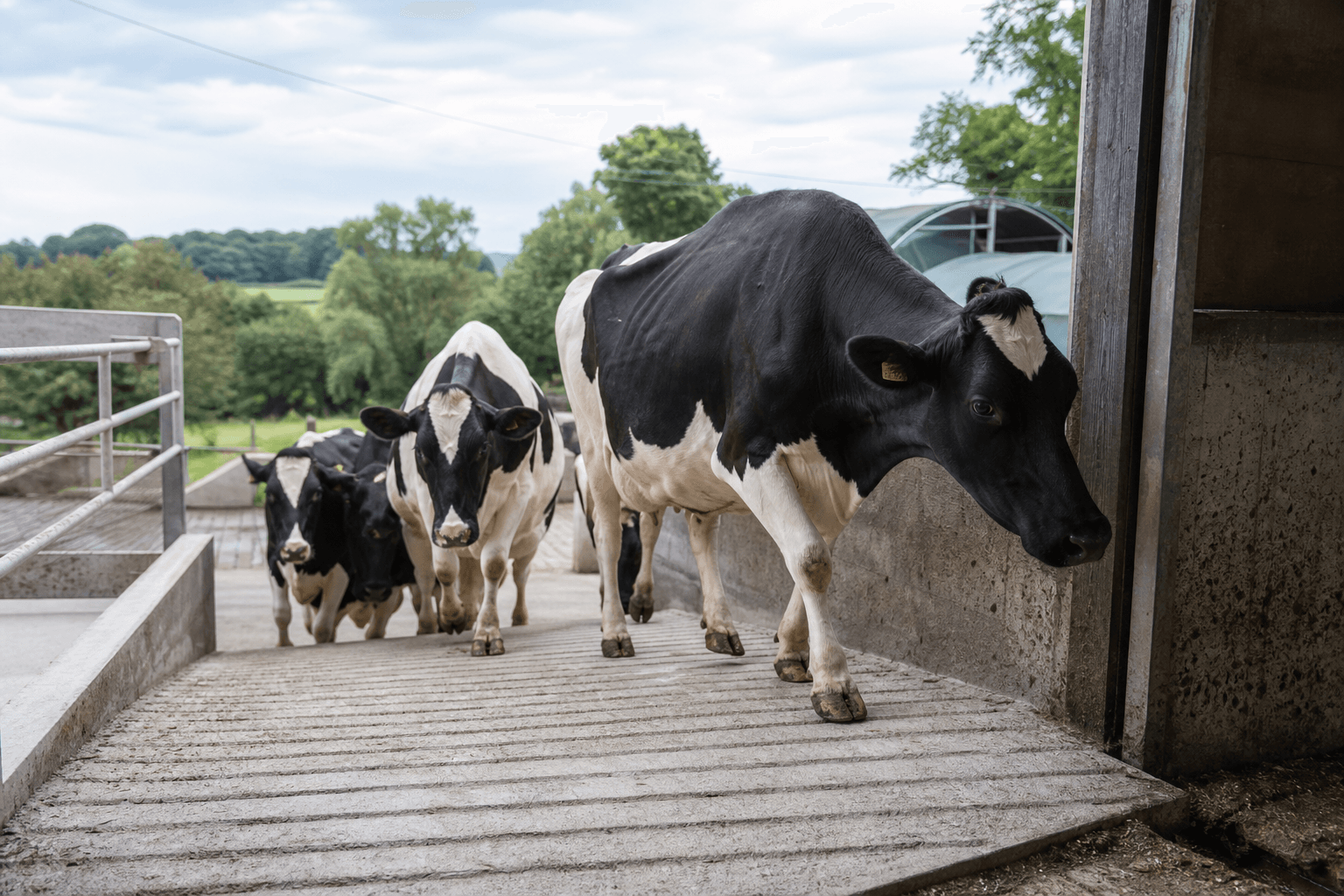
Smooth stall floors are one of the most common problems we find on walk-throughs. The alley outside might be grooved, but the stall itself is polished concrete from years of cow movement. That mismatch creates a traction cliff — cows walk confidently in the alley and then hit slick concrete the moment they step into the stall. The case for grooving isn't just about walking surfaces. It's about every place a hoof touches concrete.
You can't fix herd lameness in the alley if the stall floor is still slick.
What Happens on Smooth Stall Floors
When a cow lies down on smooth concrete, she's stable — gravity works in her favor. The problem comes when she rises. A 1,500-pound cow pushing off with her rear legs on a slick surface generates enormous torque on hooves and joints. If her hooves slide, she scrambles. Scrambling causes hoof wear, white-line damage, and hock injuries from hitting the curb or stall divider. Do that twice a day for every cow in the herd and you've got a lameness pipeline running straight to your cull list.
Behavior changes before clinical lameness shows up. Cows on slick stall floors stand more and lie less — they're uncomfortable committing to a resting position they can't easily escape. Reduced lying time means reduced rumination, lower milk production, and more time on their feet on concrete that isn't helping them. The Dairyland Initiative identifies adequate resting comfort and secure footing as core requirements for healthy dairy housing. Smooth stall floors fail both tests.
Herd managers sometimes blame stall design or bedding when resting time drops. Those matter, but footing is the foundation. A well-bedded stall on slick concrete still leaves a cow fighting the floor every time she stands. Fix the footing first, then evaluate everything else.
Watch your slow-motion phone video of cows rising in stalls if you have it — the back feet sliding half an inch is all it takes to start white-line stress. That slide is invisible at real speed but obvious on video, and it's the clearest diagnostic for whether stall grooving will move your lameness numbers.
Tractor Herringbone: The Right Pattern for Stalls
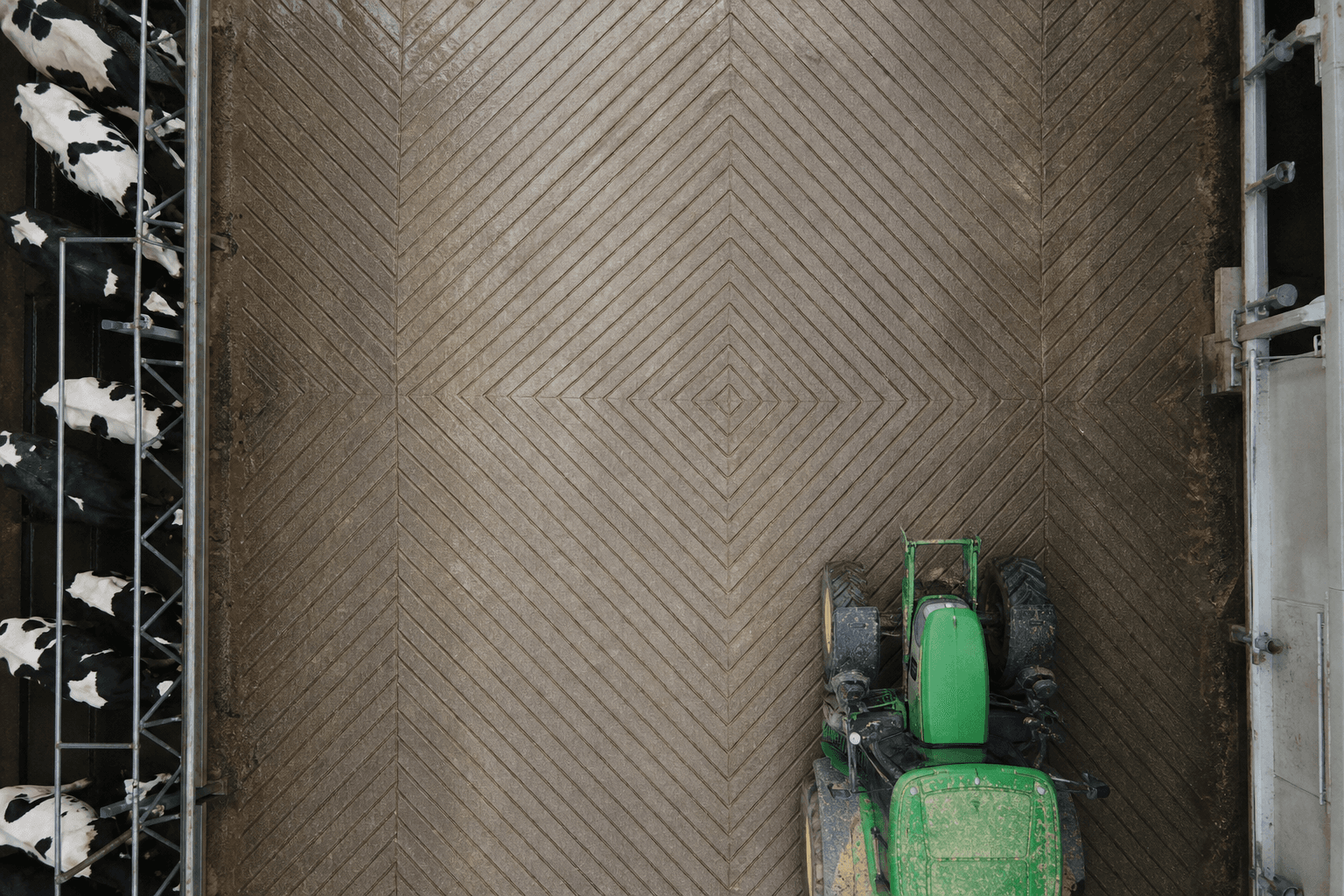
Free stalls need multi-directional grip because cows don't move in straight lines inside them. They enter at an angle, turn, lie down, and push off in a different direction when they rise. Tractor herringbone grooving cuts grooves at opposing angles so hooves always find an edge, regardless of how the cow is positioned. It's the standard pattern for stall floors in research-backed barn design, and it's what we cut on most free-stall jobs.
Spacing matters as much as pattern. Grooves too far apart leave smooth lanes between them where hooves slide. Grooves too close together can create abrasion if edges are sharp and spacing is tight. We cut square-edged grooves at spacing that matches your stall dimensions and cow size — the same approach we've refined over 35+ years. See our full pattern options to understand how herringbone fits with straight-line alley grooving and diamond turn patterns.
The transition from alley to stall matters too. If the alley is grooved but the stall entry is smooth, cows hesitate at the boundary. We plan groove continuity so cows step from one zone to the next without losing confidence. That detail is part of every free-stall grooving job we do.
Measuring the Herd Health Payoff
The return on free-stall grooving shows up in metrics you already track. Lameness incidence drops. Cull rates for feet and legs improve. Resting time increases — cows lie down faster and stand up smoother. Milk production stabilizes because cows aren't burning energy fighting the floor or standing when they should be ruminating. At $4.50 per day per lame cow, even a modest reduction in lameness rate pays for the grooving investment quickly.
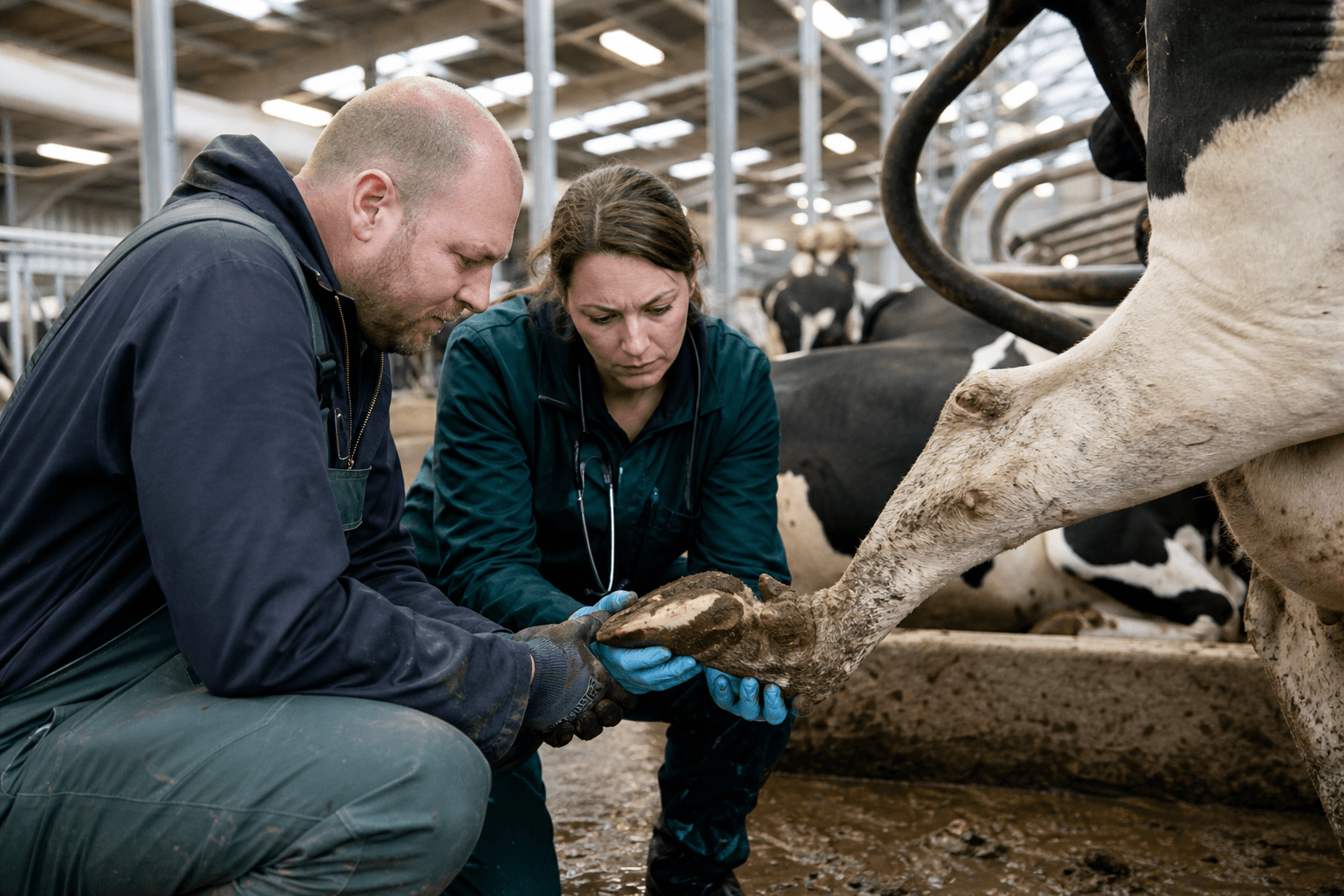
Foot trimmers notice the difference before the vet does. Less white-line disease, fewer sole ulcers, and less hoof wear between trims. That's because secure footing reduces the scrambling and torque that cause those conditions in the first place. Grooving doesn't replace good hoof care — it removes one of the biggest environmental triggers working against your trimmer's work.
If you're building the case for a grooving investment to ownership or a lender, frame it against the numbers: lameness is the #3 cost on a dairy farm, and stall floors are where a large share of those injuries originate. A free estimate on stall grooving usually surprises people — at roughly $0.75/sq ft, it's far less than one serious lameness case costs to treat.
Stall Grooving vs. Other Fixes
Rubber mats, additional bedding, and stall redesign all have their place. None of them replace grooving on concrete stall floors. Mats shift, curl at edges, and trap moisture underneath. Extra bedding helps comfort but doesn't give hooves grip on a slick surface. Stall redesign is expensive and still leaves you with concrete that needs traction if the floor surface itself isn't addressed.
Concrete grooving is permanent, requires no daily maintenance, and lasts 6–8 years before regrooving. It's the same proven approach used in alleys and parlors, applied to the zone where your cows spend the most time. If you're comparing surface treatments, read our grooving vs. milling breakdown — milling doesn't give you the square-edged, pattern-specific grip that stall floors need.
Some farms groove stalls during a planned downtime — dry period, barn renovation, or between groups. We work around your schedule and can phase stall rows if taking the whole barn offline at once isn't practical. The goal is secure footing without disrupting milk production more than necessary.
Getting Stalls Done Right
Stall grooving requires precision. Grooves need to stop before stall dividers and curbs, spacing must match stall width, and the cut depth has to be consistent across the entire surface. Our crew has grooved thousands of stall rows and knows how to work around existing hardware, manure passages, and auto-scraper tracks without compromising the pattern.
Before we cut, we walk every stall row with you and mark zones. After we cut, we walk it again so you can see the pattern and feel the grip. No handoff to a salesman who wasn't on the job — the crew that quotes is the crew that cuts. That's how Davidson has operated for more than 35 years, and it's why farms call us back when it's time to regroove. Learn more about our crew on the about page, or request an estimate to get stalls on your schedule.
Stall grooving pairs naturally with alley work — cows shouldn't feel secure in the alley and then hit slick concrete the moment they step into a stall. If you're phasing a project, do stalls and connecting alleys in the same phase whenever possible. The traction continuity matters as much as the pattern inside the stall itself.
The Dairyland Initiative lists secure footing and adequate resting comfort as core housing requirements — stall grooving addresses both in one cut. Cows that trust the floor lie down faster, stand up smoother, and spend more time ruminating. That behavioral shift is the earliest sign the investment is working.
Frequently Asked Questions
Will grooving damage my stall dividers or curbs?
No. We plan groove paths around dividers, curbs, and hardware. Grooves stop where they need to stop. Our crew has grooved thousands of stall rows and works carefully around existing equipment.
How soon will I see changes in cow behavior after stall grooving?
Most managers notice smoother rising and lying within days. Resting time and lameness metrics typically show measurable improvement over the following weeks and months as cows adjust and previously injured feet heal.
Should I groove stalls at the same time as alleys?
Ideally, yes — matching traction across zones prevents the alley-to-stall traction cliff. If budget requires phasing, prioritize the zone where you see the most scrambling or lameness. We can help you sequence the work.