Farm Economics
When Lameness Drops, Milk Revenue Rises — The Grooving ROI
By Rick Jr. · April 14, 2025
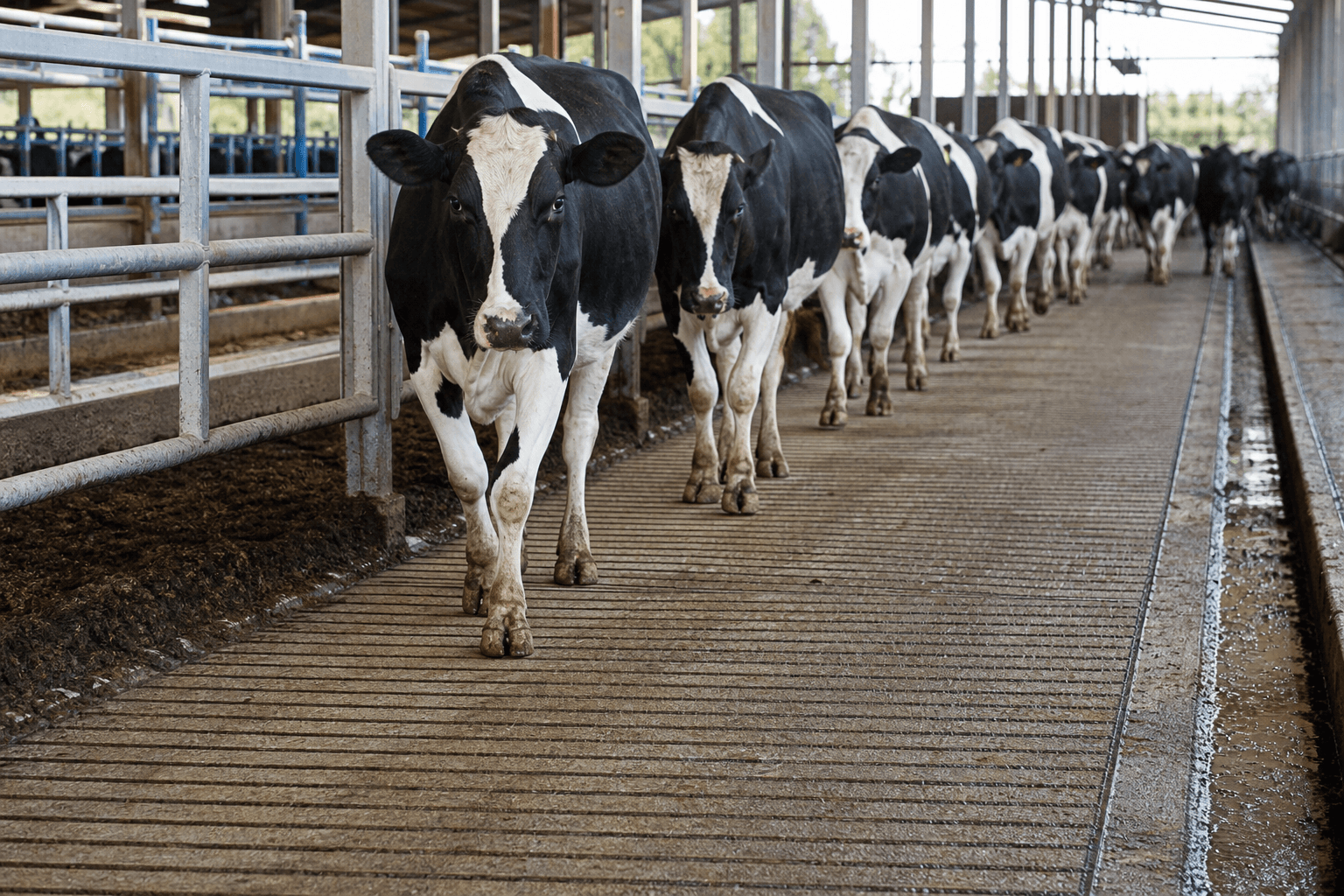
Dairy farm bulk tank and grooved barn floor representing milk revenue protected by lameness prevention grooving
Lameness costs real money every day a cow is lame. Grooving your barn floor is one of the few investments where the payback shows up in both the vet bill and the bulk tank.
The Number Nobody Wants to Calculate
Most dairy farmers know lameness is expensive. Fewer have sat down and multiplied it out. At about $4.50 per day per lame cow, a single lame animal costs you $1,642 per year before treatment. Scale that across a herd where 20–25% of cows are affected and you're looking at six figures walking out the door annually — on a problem that's largely preventable.
Add milk loss: 700–900 lbs per case, depending on severity and stage of lactation. Add treatment: $76–$533 per case for trims, wraps, blocks, and antibiotics. Lameness ranks as the #3 cost on a dairy farm, behind feed and labor. That's not a footnote — it's a budget line item hiding in plain sight.
Grooving won't fix every lameness case. Nutrition, genetics, and stall design all matter. But slick concrete is one of the most common and most fixable triggers. At roughly $0.75/sq ft, barn floor grooving is one of the highest-return investments you'll make in the building itself.
Lameness ranks as the #3 cost on a dairy farm — a budget line item hiding in plain sight.
Running the Numbers on Your Barn
Take a 400-cow dairy at 20% lameness. That's 80 lame cows × $4.50/day × 365 days = $131,400 per year in daily lameness cost alone. Drop lameness to 12% — a realistic target after grooving slick zones — and you're down to 48 cows costing $78,840. That's $52,560 back in your pocket every year from footing alone.
Now subtract the grooving bill. A typical freestall barn runs about 15 sq ft per cow for grooving surface area. Four hundred cows × 15 sq ft × $0.75 = $4,500. Payback in about five weeks if lameness drops as expected. Even conservative estimates put ROI inside the first lactation.
We provide a free estimate based on your actual barn layout and square footage — not a ballpark from a salesman who never saw your floor. Read why grooving works for the research backing the investment.
Where the Money Leaks
Lameness money leaks in four places: lost milk, treatment cost, extended days open, and early culls. A lame cow milks less, breeds later, and leaves the herd sooner. Each cull replaces a known producer with a heifer still paying off her rearing cost. The floor-triggered lame cow costs you twice — once in production and once in replacement.
Grooving stops the leak at the source. Square-edged grooves at Dairyland Initiative spacing prevent the slips and micro-slips that start the lameness chain. Compare that to milling or surface treatments on our grooving vs milling page — the long-term economics favor grooves that last 6–8 years over textures that fade unevenly.
Regrooving on cycle — before edges wear smooth — keeps the protection active without the spike in lameness that comes from waiting too long. Think of it like preventative maintenance on a mixer: cheaper to service on schedule than to replace after a breakdown.
Component pricing on milk checks doesn't capture lameness directly, but fat and protein often slide when cows aren't walking to feed on schedule. Footing affects intake rhythm. When grooving fixes traffic, components sometimes stabilize without ration changes — another economic line item grooving touches without appearing on the invoice.
Five-Year View vs. One-Time Cost
Grooving is a one-time cost every 6–8 years, not an annual expense. Spread a $5,000 grooving job over six years and you're at $833/year to protect a herd generating millions in milk revenue. Spread it against $50,000+ in annual lameness losses and the math isn't close.
Farms that track lameness before and after grooving consistently report lower trimmer bills, fewer antibiotic days, and better tank averages within two lactations. Those savings compound. A cow that stays in the herd an extra lactation because her feet held up pays for a lot of concrete work.
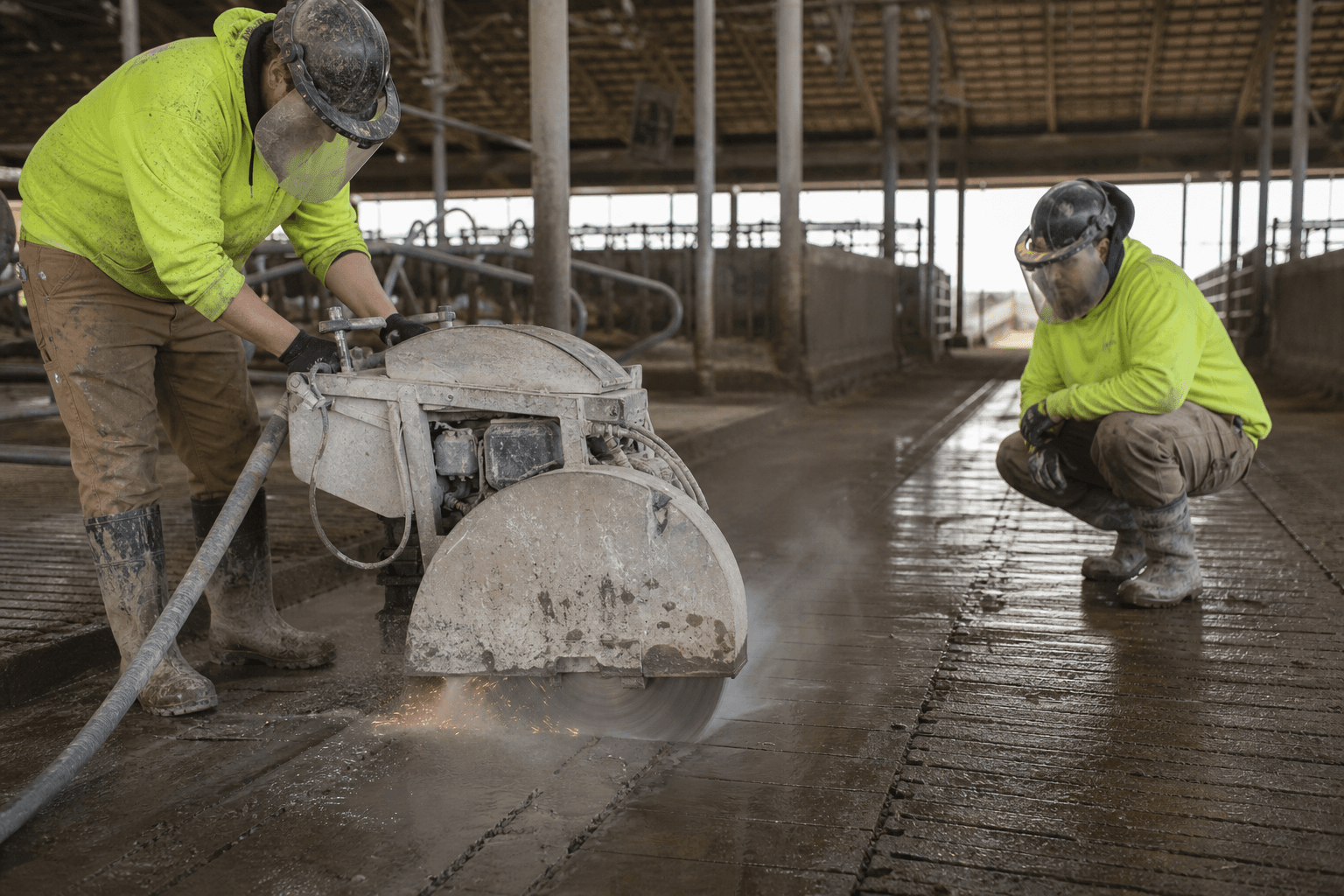
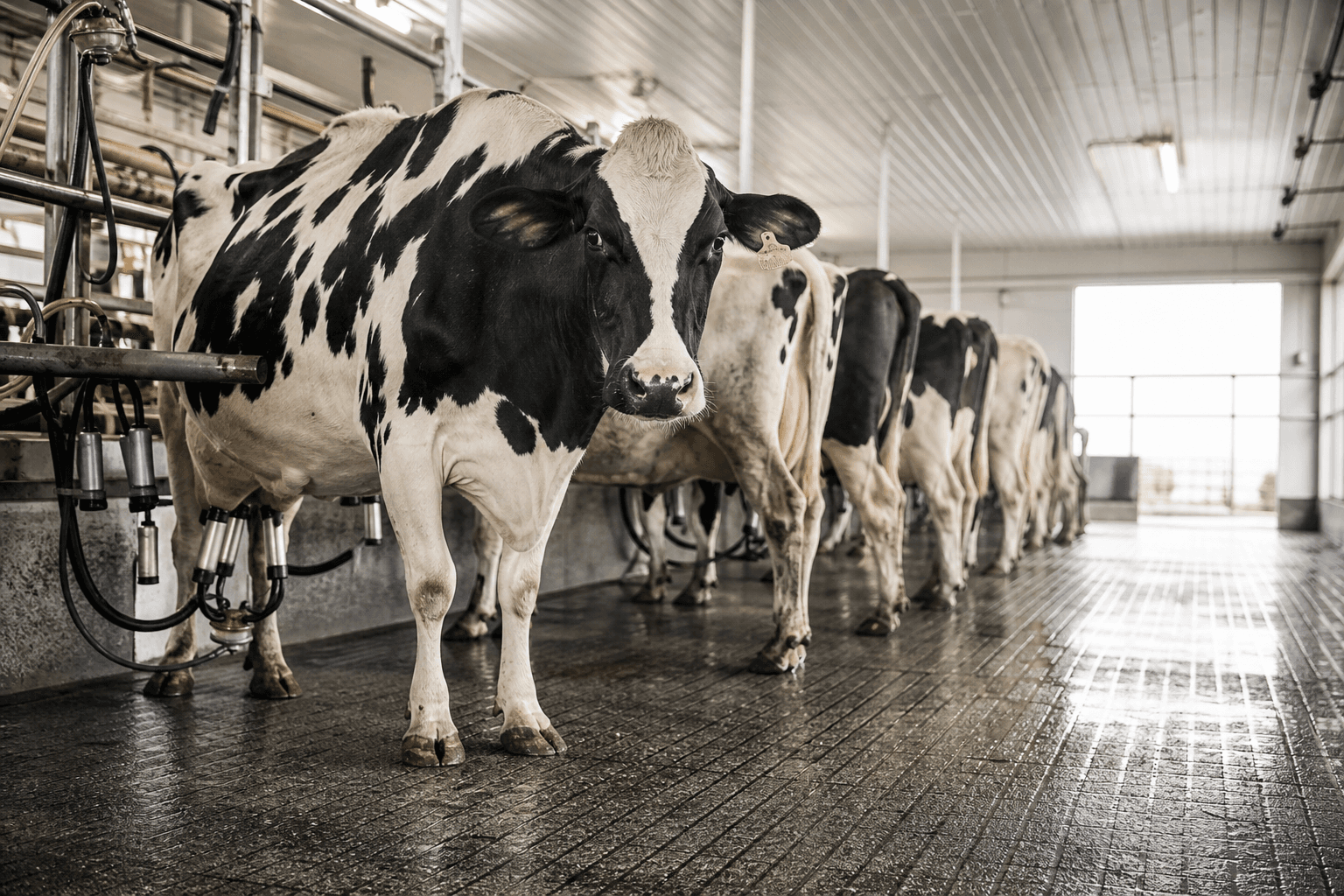
Our grooving services cover initial cuts and regrooving for alleys, free stalls, holding areas, parlors, and ramps. Different zones use different grooving patterns optimized for traffic type. We match the cut to the use.
Heifer groups on the same alleys benefit too — fewer injuries before first lactation means more cows entering the milking string with sound feet instead of compensating for barn injuries they carried from the grower pen.
What Cheap Work Actually Costs
The worst ROI isn't skipping grooving — it's paying for bad grooving. Rounded edges, wrong spacing, or a milling job sold as grooving gives you half the traction and none of the longevity. You pay once, get two years of partial benefit, and pay again.
We've regrooved floors that other contractors cut too shallow or too wide. The farm paid twice and lost cows in between. Our crew has 35+ years of experience cutting square-edged grooves that last the full cycle. Fair pricing at about $0.75/sq ft — no markup games, no inflated measurements.
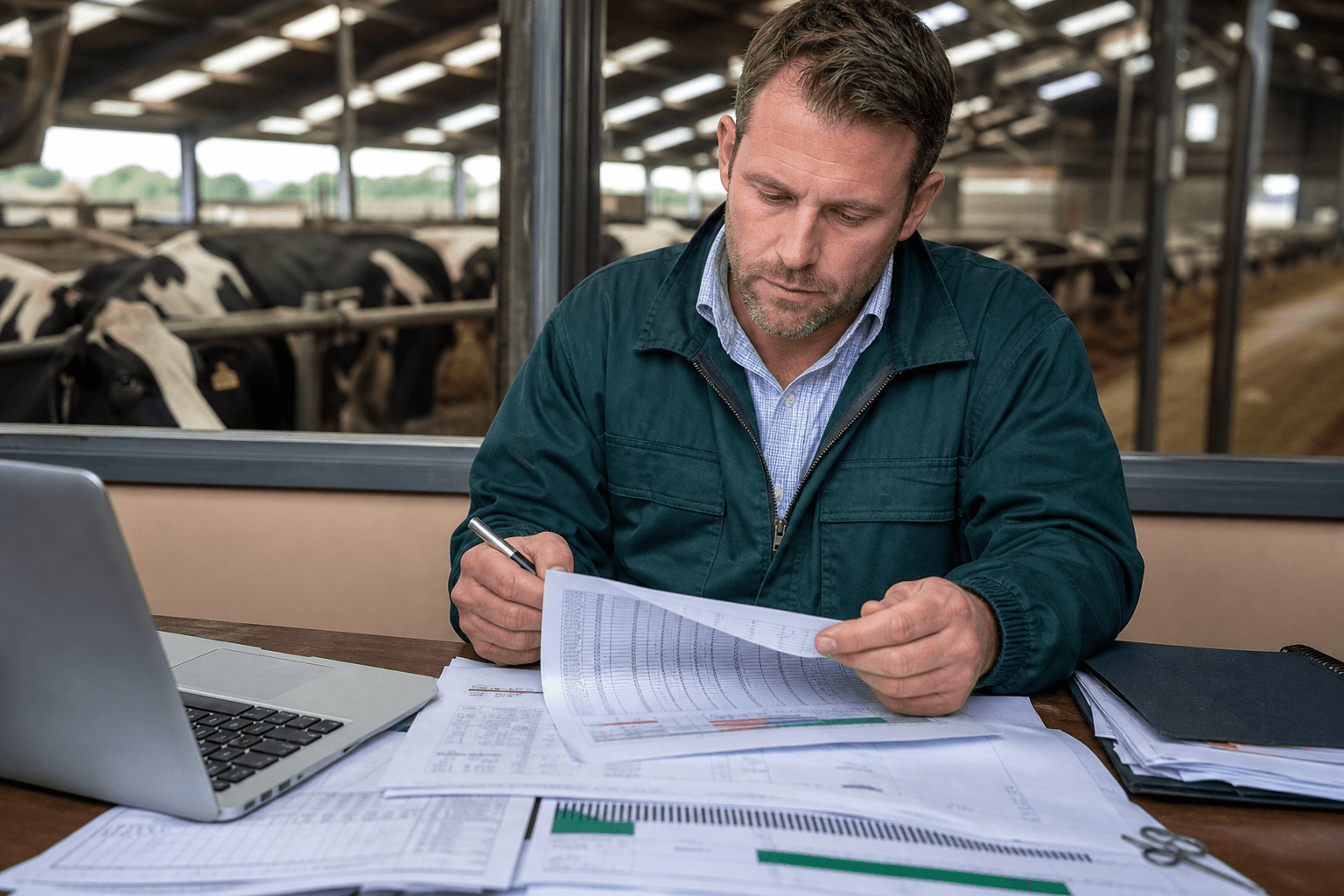
Get a free estimate and compare it to your last year's lameness line item. If grooving pays for itself in weeks and protects revenue for years, the decision makes itself.
Keep Revenue in the Tank
Every pound of milk a lame cow doesn't give you is revenue you'll never recover for that lactation. Every cow culled for feet before her time is a replacement cost you didn't plan for. Grooving doesn't show up on the milk check as a line item — it shows up as pounds that stayed and cows that stayed longer.
Keep your herd on all fours. That's the whole business case in four words. The economics follow the health, and the health starts with the floor.
Davidson Cement Grooving — father-and-son crew, nationwide for larger barns, 35+ years of square-edged cuts. Request your free estimate and let's run the numbers for your barn.
Talking to Your Lender or Partners About Grooving
Grooving is easier to approve when you bring numbers, not anecdotes. Print your lameness rate, multiply by $4.50 daily cost, add estimated milk loss at 700–900 lbs per case, and compare the total to a grooving quote at $0.75/sq ft. Payback measured in weeks makes this a straightforward capital conversation.
Lenders who know dairy recognize lameness as the #3 cost on a dairy farm. Framing grooving as lameness prevention — not cosmetic floor work — puts it in the same category as parlor upgrades and ventilation improvements. It's infrastructure that protects revenue.
Whether you milk 200 or 2,000 cows, the ratio holds: one-time grooving cost against multi-year lameness savings. Run the math for your barn with our free estimate and put real figures behind the decision.
Insurance and warranty conversations sometimes come up. Grooving doesn't prevent every injury, but documented footing improvement supports welfare audits and buyer questions about lameness management. If your milk buyer or certifier asks what you've done about cow comfort, a properly grooved barn is a concrete answer — literally.
Five-year savings math: take annual lameness cost, multiply by five, subtract one grooving bill at about $0.75/sq ft and one regroove if you're in the window. Most farms still come out well ahead even using conservative lameness reduction assumptions. The upside case — fewer culls, better components, lower trimmer frequency — is better still.
ROI isn't theoretical on most dairies we regroove. Farmers call back six years later because the numbers worked the first time — and because the cows told them the edges wore off before the calendar did.
Milk checks don't itemize lameness, but your accountant sees it in vet supplies, trimmer invoices, and cull checks. Grooving gives those lines somewhere to shrink.
When lameness drops and milk revenue rises, the grooving bill looks small against a full year of tank data. That's the ROI conversation worth having with anyone who shares the checkbook.
Frequently Asked Questions
How quickly does grooving pay for itself?
On most dairies with significant lameness tied to slick floors, grooving pays back within the first lactation — often within weeks to months when you calculate daily lameness cost at $4.50 per cow against a one-time grooving investment at roughly $0.75/sq ft.
Does grooving increase milk production directly?
Grooving prevents the production loss that lameness causes. A cow that doesn't go lame keeps giving the 700–900 lbs she'd otherwise lose per case. It's protection, not stimulation — but the tank difference is real.
Is regrooving as cost-effective as the initial cut?
Yes. Regrooving restores worn edges at a similar per-square-foot cost and extends floor life another 6–8 years. It's significantly cheaper than new concrete and cheaper than the lameness spike that follows deferred maintenance.