Farm Economics
The Hidden Tax of Lameness on Your Dairy's Bottom Line
By Rick Jr. · August 12, 2025
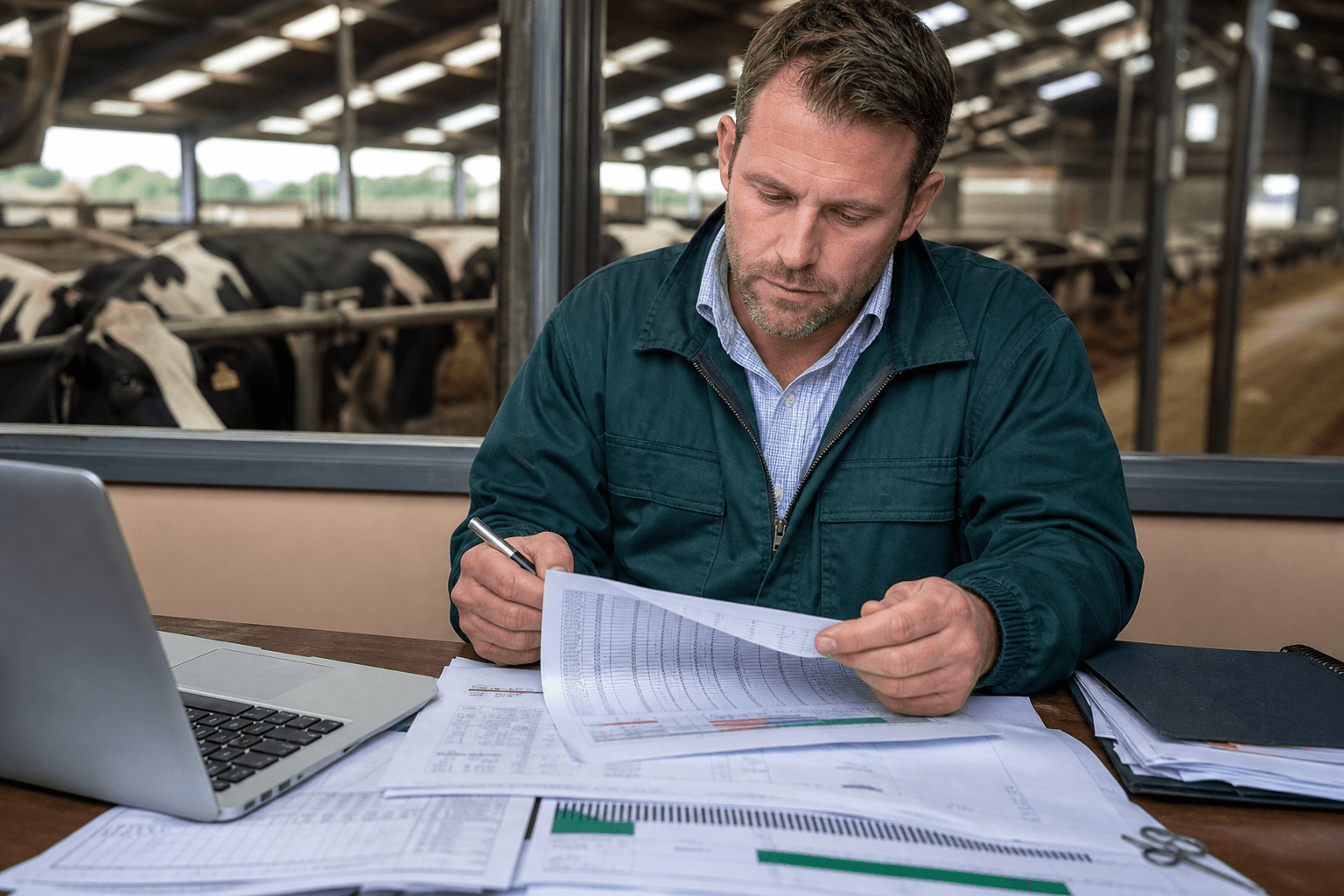
Dairy farm financial planning chart with grooved barn floor representing lameness cost reduction savings
Lameness doesn't send an invoice. It shows up as lost milk, extra trimmer visits, open days, and early culls — a hidden tax that grooving your barn floor can cut dramatically.
The Tax You Never Budget For
Dairy budgets line up feed, labor, breeding, and equipment. Lameness rarely gets its own column — it hides inside vet bills, trimmer invoices, lost milk, and culls explained as 'didn't freshen back.' That's the hidden tax: real money leaving the operation without a name attached.
Industry data puts the daily cost at $4.50 per lame cow. Cases cost $76–$533 to treat. Milk loss runs 700–900 lbs per case. Lameness ranks as the #3 cost on a dairy farm. Stack those numbers on a 300-cow operation at 22% lameness and you're paying a six-figure tax every year — mostly on preventable footing problems.
Grooving at roughly $0.75/sq ft isn't an expense in that picture. It's a tax cut. One investment every 6–8 years that stops the leak at the barn floor.
Lameness rarely gets its own budget column — it hides inside vet bills, trimmer invoices, and culls.
Four Places the Hidden Tax Collects
Lost milk is the biggest silent withdrawal. A lame cow doesn't drop to zero — she slides down 5–15% over weeks before anyone flags her. Multiply that across dozens of cows and the tank average tells a story your income statement won't itemize.
Treatment and trimmer costs are easier to see but still scattered. Blocks, wraps, antibiotics, extra visits — $76–$533 per case adds up when 20% of the herd cycles through the chute twice a year instead of once.
Extended days open and early culls are the long-tail tax. A lame cow breeds late or not at all. She leaves before her time. Replacement heifers cost money that lameness burns without a line item. Read how grooving interrupts this on our why grooving page.
Labor efficiency hides in the same numbers. When milkers aren't waiting on lame stragglers and hoof trimmer emergency visits drop, hours return to productive work. The hidden tax includes overtime you didn't connect to footing — until grooving fixes the bottleneck and the extra shifts disappear.
Depreciation schedules capture equipment. They don't capture a freestall alley that polished smooth over a decade while lameness climbed half a point per year. Grooving belongs in capital planning alongside equipment because it protects the asset that generates milk — the cow — not just the concrete beneath her.
Calculating What Your Barn Is Costing You
Simple math: lame cow count × $4.50 × 365. That's your annual daily-cost baseline before treatment and milk loss. A 500-cow dairy at 20% lameness — 100 cows — pays $164,250 per year at the daily rate alone.
Compare that to grooving cost: cows × ~15 sq ft × $0.75/sq ft. Same 500-cow barn ≈ $5,625 for a full grooving pass. Payback in weeks if lameness drops even a few points. Our free estimate uses your actual layout, not a guess.
Regrooving on the 6–8 year cycle keeps the tax from returning. Deferred maintenance is how hidden taxes grow — edges round, slips increase, lameness climbs, and the bill looks like a bad year instead of a neglected floor.
Grooving vs. the Alternatives on Cost
Some farms try milling, acid etching, or rubber mats before grooving. Each has a place, but for dairy barn alleys and holding areas, square-edged grooving at Dairyland Initiative spacing delivers the best long-term traction-to-cost ratio. See grooving vs milling for the comparison.
Cheap grooving that rounds edges or uses wrong spacing becomes its own hidden tax — you pay for work that fails in three years and leaves you with lame cows in the meantime. Proper work from an experienced crew lasts the full cycle.
Pattern selection affects value too. Straight-line, diamond, and herringbone cuts matched to barn zones — see our patterns page — maximize grip per dollar spent. Blanket one-pattern jobs waste cuts on zones that need something different.
Building Lameness Prevention Into Capital Planning
Treat grooving like parlor maintenance — scheduled, budgeted, non-optional. If your last cut was 2016, you're in the regroove window. Waiting for lameness to spike before acting is like waiting for the mixer to seize before changing oil.
Phase by zone if cash flow requires it: holding and returns first, then alleys and free stalls. Our services page breaks down options. Partial grooving beats no grooving, but plan the full barn within a season or two.
The hidden tax shrinks the year you cut and stays down through the regroove cycle. Farms that track lameness year-over-year see the line move. That's real money back in the operation.
Treat grooving like parlor maintenance — scheduled, budgeted, non-optional.
Stop Paying the Tax
You can't eliminate every lame cow. You can stop paying a hidden tax on footing you control. Square-edged grooving at fair pricing — about $0.75/sq ft from a crew with 35+ years in dairy barns — is one of the clearest ROI decisions on the farm.
Keep your herd on all fours. Keep revenue in the tank. Cut the tax that never showed up on your spreadsheet but always showed up in your bank account.
Davidson Cement Grooving — father-and-son crew, nationwide travel, honest estimates. Request a free estimate and we'll run your numbers together.
Benchmarking Before and After
Pull three numbers before grooving: lameness prevalence, average milk per cow, and foot-related cull count for the last twelve months. Check them again twelve months after the cut. The delta is your grooving ROI — more honest than any contractor promise.
Include trimmer visit frequency and antibiotic days for foot cases if you track them. Those costs hide inside the hidden tax too. Farms that benchmark see the full picture, not just the dramatic culls but the slow bleed of mildly lame cows underproducing in the background.
At $4.50 per day per lame cow, even small improvements in prevalence translate to real money. Grooving at roughly $0.75/sq ft once per 6–8 year cycle is one of the few barn investments where the before-and-after numbers usually speak for themselves.
Share benchmarks with your nutritionist. Sometimes ration changes and footing fixes get debated in isolation when both drive lameness. If grooving drops new claw lesions, feed efficiency on the same ration often improves because cows reach bunks and waterers without hesitation — intake timing matters as much as intake formulation.
Tax planning note: spread grooving across fiscal years if you're phasing zones, but don't stretch phasing so long that partial protection leaves lame cows in ungrooved sections. The hidden tax accrues every month slick concrete stays slick. A phased plan with dates beats an open-ended someday list.
Name the tax, track the tax, then cut the tax with square-edged grooving at a fair price. The spreadsheet finally matches what the trimmer already knew.
Quarterly lameness scoring paired with annual grooving budget review keeps the hidden tax from disappearing back into the background where it thrives unnoticed.
The farms that win on lameness economics name the cost, fix the floor, and regroove on schedule. The farms that struggle treat each lame cow as bad luck instead of a signal about the concrete underneath her.
Hidden taxes compound silently. A half-point lameness increase per year doesn't trigger alarms until the trimmer is booked solid and the tank average dips with no other explanation. Grooving interrupts that drift before it becomes the new normal.
Stop paying the hidden tax. Name it, measure it at $4.50 per lame cow per day, and cut it with grooving at about $0.75/sq ft on the cycle your barn already needs.
Your trimmer already knows the tax amount. The grooving estimate just tells you how cheaply you can make it stop.
Request a free estimate and compare it line by line to last year's lameness spend. The answer is usually obvious.
Frequently Asked Questions
How do I track lameness cost on my farm?
Start with lame cow count × $4.50/day × 365 for a baseline. Add trimmer and vet invoices tagged to foot cases. Compare tank averages before and after footing improvements. Most farms underestimate until they run the full calculation.
Is grooving tax-deductible as a farm improvement?
Grooving is typically treated as a barn maintenance or capital improvement expense. Consult your accountant for how to classify it on your operation — rules vary by structure and timing.
What's the biggest hidden lameness cost most farms miss?
Lost milk from cows that are mildly lame but still in the tank. They don't get treated aggressively, so their production slide doesn't get attributed to feet — but the pounds add up across the herd.