Herd Health
Keeping Cows on Their Feet Starts With the Floor Beneath Them
By Rick Jr. · March 10, 2025
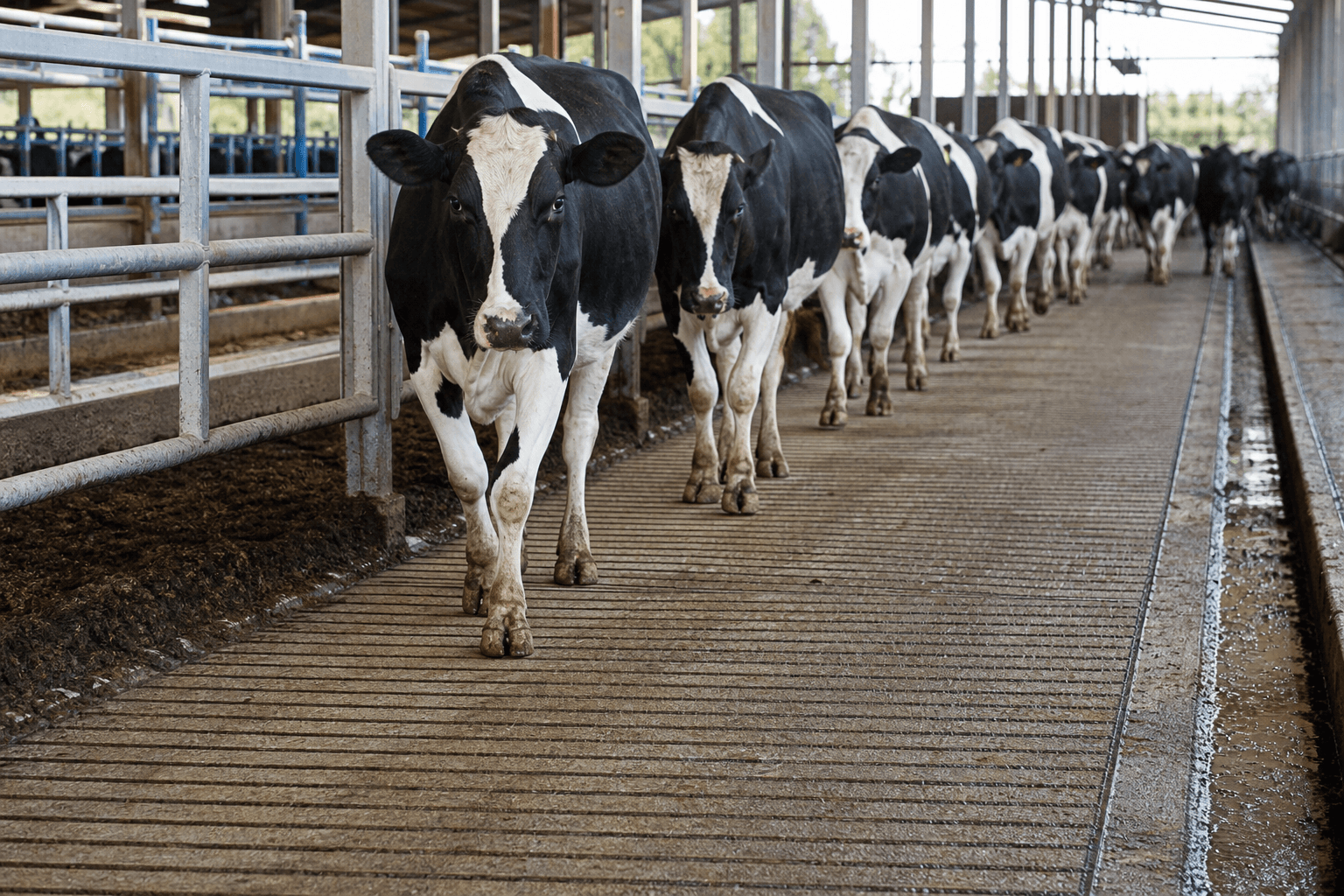
Healthy dairy cows standing and walking on square-edged grooved concrete keeping the herd on all fours
A cow on three legs is a cow on her way out of the herd. Most lameness starts with footing problems you can fix before the hoof trimmer ever gets called.
Four Legs Is the Job Description
A dairy cow has one job that everything else depends on: stay on her feet. Eat on her feet. Walk to the parlor on her feet. Lie down and get back up on her feet. When one leg goes bad, milk production drops, breeding gets delayed, and the cull list gets shorter. Keeping cows on their feet isn't a wellness trend — it's the baseline for a profitable herd.
Most lameness doesn't start in the trim chute. It starts on the barn floor — a slip, a twist, a repeated micro-slide on smooth concrete that the cow compensates for until the hoof breaks down. Lameness ranks as the #3 cost on a dairy farm, running about $4.50 per day per lame cow with 700–900 lbs of milk lost per case and treatment costs from $76–$533.
The floor is the one thing every cow touches every hour of every day. Before you adjust rations or swap genetics, look down. If the concrete is slick, no other improvement fully protects your herd. Learn more about the mechanics on our why grooving page.
Most lameness doesn't start in the trim chute. It starts on the barn floor.
How Slips Turn Into Lameness
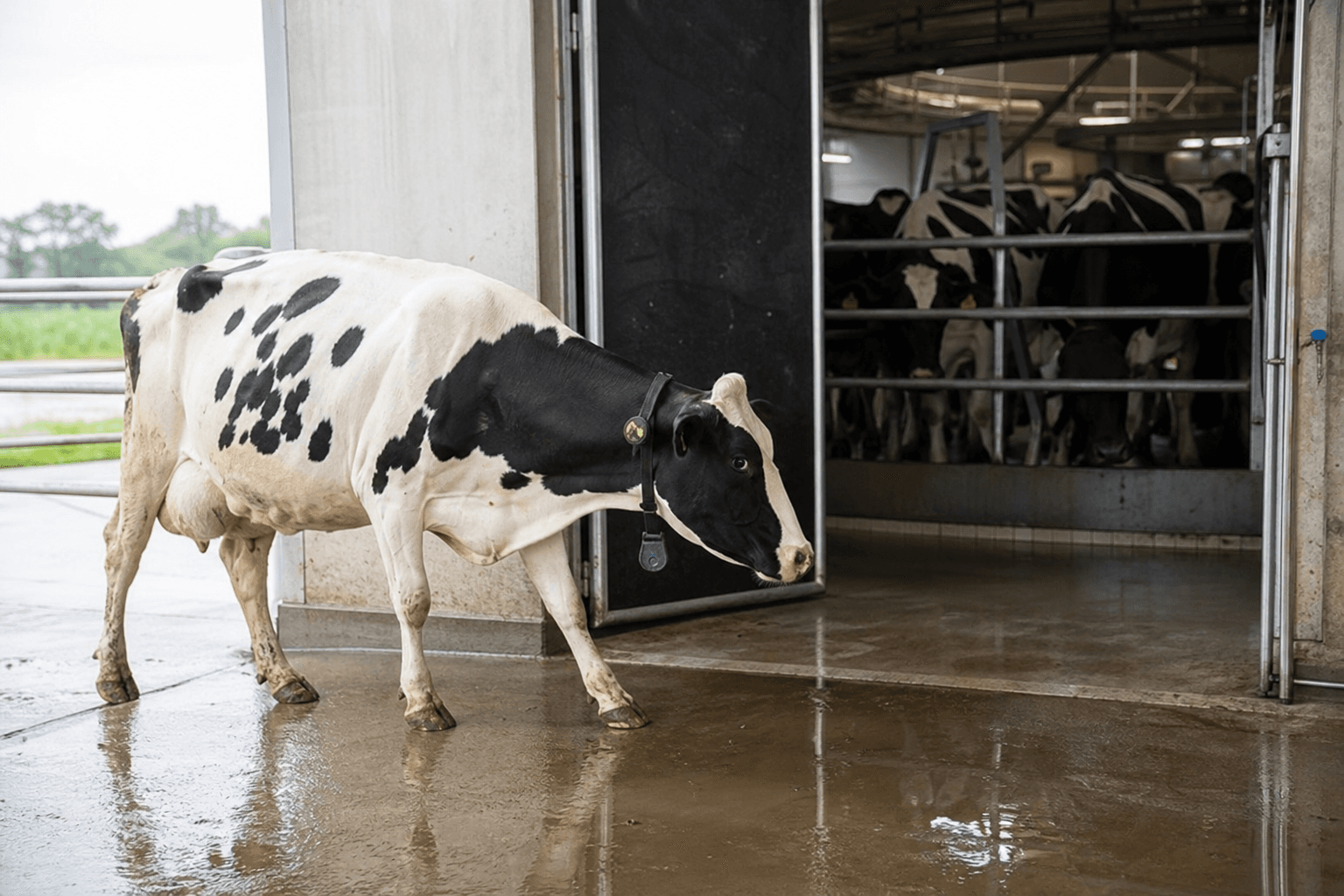
A slip isn't always dramatic. Sometimes it's a half-step scramble that the cow catches. She keeps walking. You never see it. But her claw loaded wrong for a fraction of a second, and that load repeats every trip to the bunk, every return from the parlor, every time she stands in a crowded alley.
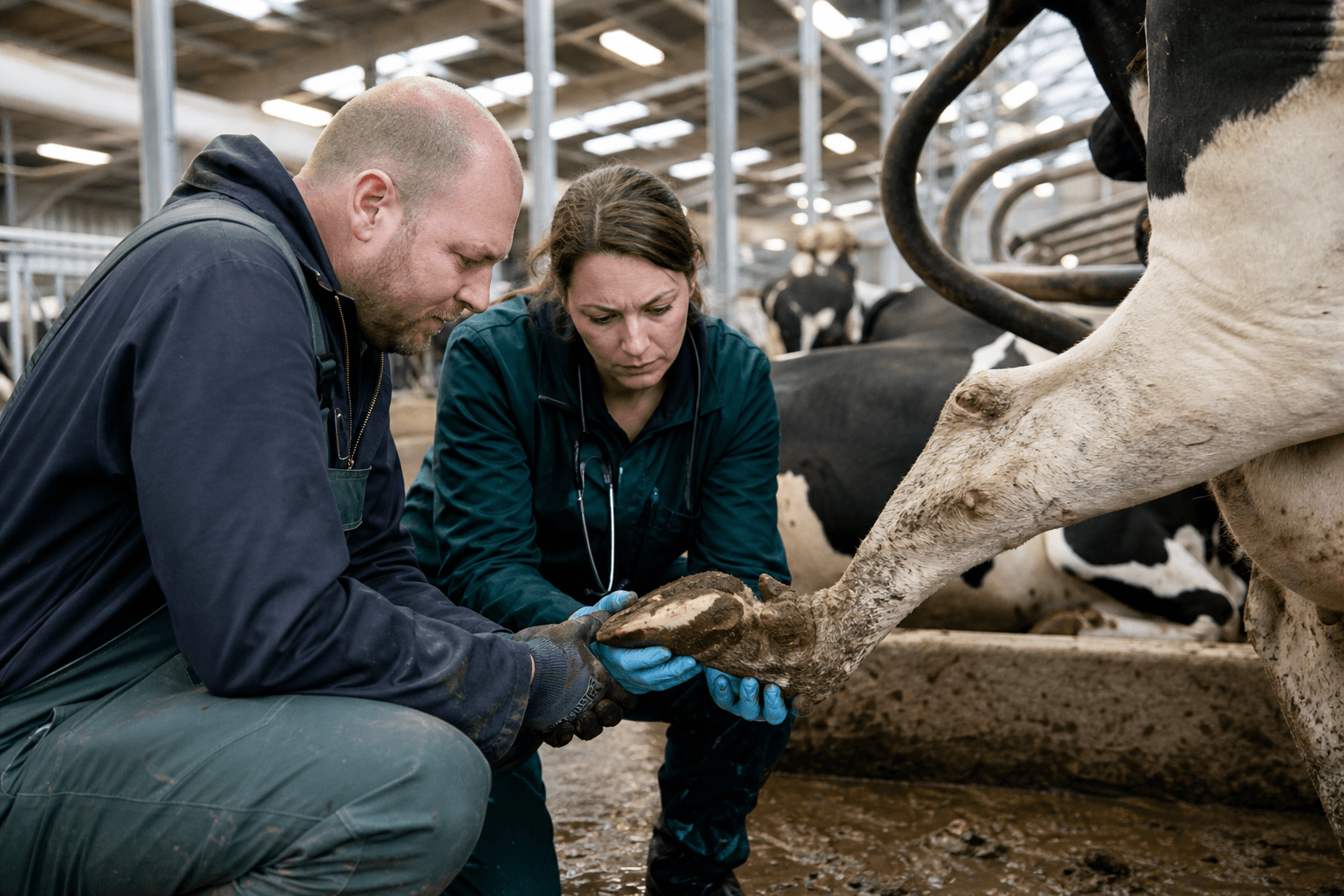
Hoof trimmers can read the history in the sole. White line separation, toe ulcers, and corkscrew claws often trace back to chronic footing stress. By the time she's visibly lame, you've lost weeks of production and you're into treatment territory — money and time that proper barn floor grooving would have saved.
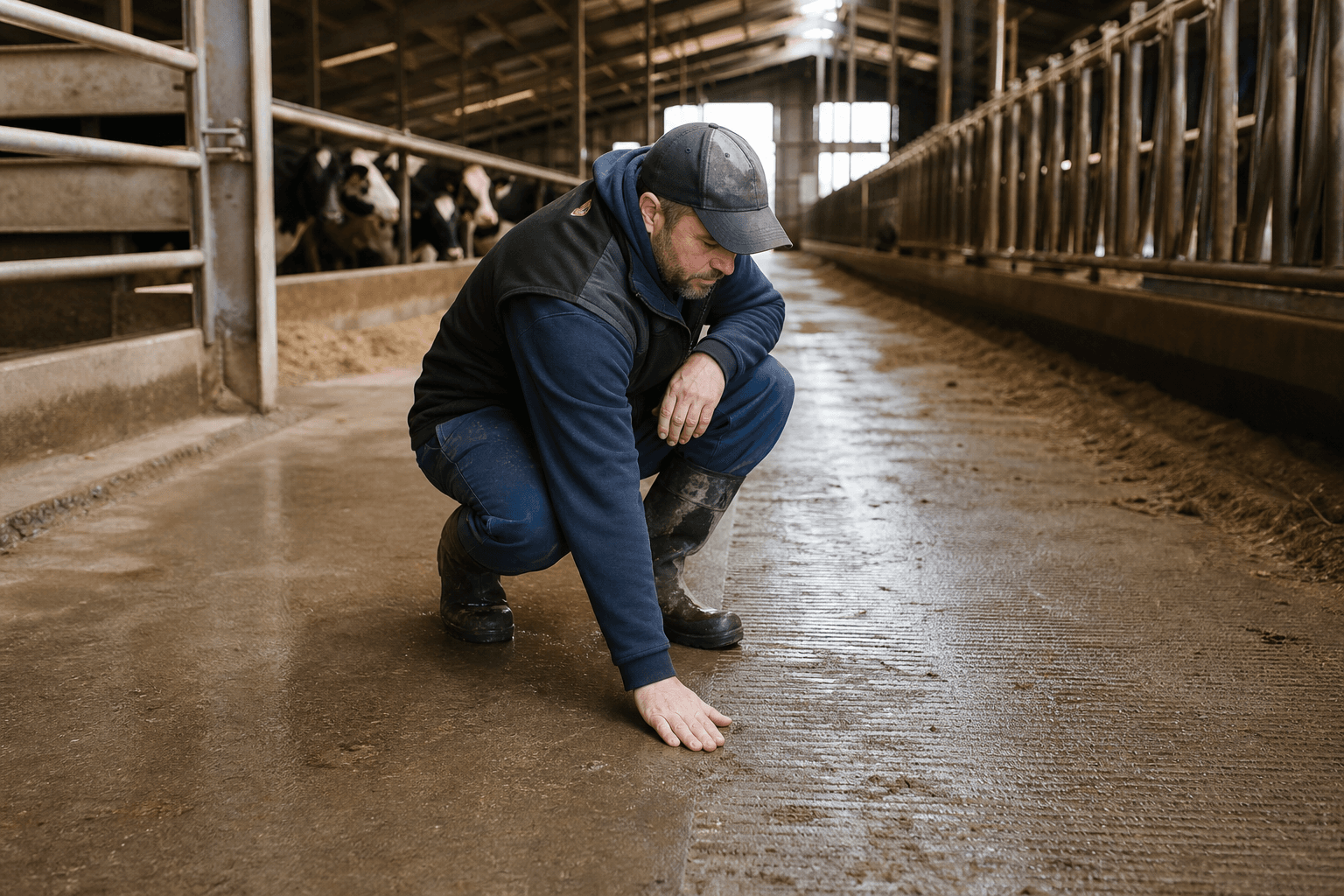
Smooth floors are worst when they're wet, and barn floors are wet most of the day. Manure, wash water, and leaked milk create a film that turns polished concrete into a slide. Grooving breaks that film and gives each claw an edge to catch. At roughly $0.75/sq ft, it's the cheapest insurance policy your hoof health program can buy.
Zones Where Cows Lose Their Footing
Not every square foot of the barn fails equally. Holding areas see cows packed tight, shifting weight, and waiting on edge. Parlor returns see cows accelerating out of the parlor onto a straight shot back to free stalls. Turn areas and waterers see pivots and stops that stress hooves on slick surfaces.
Free stall rows matter too — not just the alleys between them. Cows push off the rear curb when they stand. If that push is on smooth concrete, the force goes through the hoof wrong. I've walked barns where the alleys were grooved fifteen years ago but the holding area was never touched. Guess where lameness clustered.
Our article on where slips start in barn zones goes deeper on mapping your risk areas. The takeaway: grooving the whole barn matters, but prioritizing high-stress zones first stops the bleeding while you plan the rest.
Sand bedding and mattress stalls don't eliminate the need for grooved alleys — cows still walk to the parlor on concrete. The alley is where repeated load happens. Free stall comfort means nothing if the path to milking is where she scrambles twice a day and starts the lesion that shows up at mid-lactation.
Grooving That Protects Hooves, Not Hurts Them
There's a wrong way to groove, and dairies that got burned by bad work sometimes swear off grooving entirely. That's a shame, because the research is clear: square-edged grooves at Dairyland Initiative spacing protect hooves while providing traction. The problems come from rounded edges, wrong spacing, or contractors using equipment that leaves a profile more abrasive than gripping.
Our crew cuts with diamond-blade saws that leave clean 90-degree edges. Spacing matches the application — straight-line for alleys, diamond at turns, herringbone on ramps. See our pattern options and compare approaches on grooving vs milling.
Done right, grooves last 6–8 years before regrooving restores the edges. Done wrong, you're regrooving in three years and calling the trimmer more often. Experience matters. We've been at this 35+ years — same standards, same crew, same fair price.
Building a Footing-First Herd Health Plan
Start with a lameness audit tied to the floor. Walk your barn during the wettest part of the day. Flag every spot where a cow hesitates, spreads her legs, or scrambles. Cross-reference with your trimmer's records from the last year. The overlap will tell you where to cut first.
Schedule grooving on the 6–8 year cycle before problems spike, not after. If your last cut was 2017, you're overdue. Regrooving restores square edges without replacing the floor — a fraction of the cost of new concrete and a fraction of the cost of lame cows.
Request a free estimate from our grooving services team. We'll measure your square footage, identify priority zones, and give you a straight number. Keep your herd on all fours — that's the goal, and it starts with the floor beneath them.
Keep your herd on all fours — that's the goal, and it starts with the floor beneath them.
What Changes When Cows Trust the Floor
Farms with maintained grooving report fewer emergency trimmer visits, lower lameness rates at the next herd check, and cows that lie down and rise more naturally in free stalls. None of that requires a new facility — just a floor that does its job.
The milk tank reflects it too. When lame cows drop from 25% to 15% of the herd, you're not just saving $4.50/day per recovered cow — you're keeping pounds in the tank that were walking out the door on three legs.
Spring is a good time to evaluate. Wet floors, heavy traffic, and pre-breeding season all make footing problems obvious. Call us for a walk-through or send photos of your worst zones. Davidson Cement Grooving — 35+ years keeping dairy herds on their feet.
Working With Your Hoof Health Team
Grooving doesn't replace your hoof trimmer, nutritionist, or vet — it gives them fewer footing-related fires to fight. Share your grooving plan with the trimmer before the cut. They know which zones produce repeat offenders and which claw lesions look like chronic slip compensation.
After grooving, ask for a before-and-after comparison at the next scheduled trim. Farms that document hoof scores alongside floor work make better regroove decisions six years out. The data closes the loop between what the floor did and what the hooves show.
Keeping cows on their feet is a team effort with the floor as foundation. Square-edged grooves at Dairyland spacing, maintained on the 6–8 year cycle, at roughly $0.75/sq ft — that's the baseline everything else builds on. Start there and the rest of the health program works harder for you.
Don't forget young stock and dry cows sharing the same lanes. Heifers on slick floors learn bad habits — hesitating, spreading wide, fighting the crowd — that follow them into the milking herd. Grooving alleys and returns protects the whole lifecycle, not just high producers in peak lactation.
Heat stress makes footing worse. Cows that already move slowly on slick concrete move even slower when they're hot. Summer is when worn grooves fail loudest. If you're evaluating in March, remember July is coming — plan cuts and regrooves with peak barn time in mind, not just the day we finish the job.
Footing first. Everything else in the health program works better when cows trust the floor under them every trip to the parlor.
Frequently Asked Questions
Can grooving reduce our lameness rate?
Farms that grooved slick barns commonly see lameness rates drop within one to two lactations. Results depend on starting conditions, barn layout, and how completely high-risk zones are addressed. Grooving addresses footing — one of the most preventable lameness triggers.
Should we groove before or after hoof trimming season?
Before, if your floors are slick. Giving cows proper footing before trimmers arrive means fewer new lesions developing between visits. If you're on the 6–8 year regroove cycle, schedule before lameness spikes rather than after.
How does regrooving differ from initial grooving?
Regrooving recuts worn grooves to restore square edges and proper depth without replacing the concrete slab. It's faster and cheaper than new construction and extends the life of your existing floor by another 6–8 years.